
Valet Trash Can Size
There is no single required gallon size. The can has to fit the landing or stoop, hold a tied household bag, and be the only place residents set trash out.
- Honest and reliable
- One point of contact
- Your hauler stays
- 99+ locations offered
Containers
Fit the door, then the bag
- 01The landing
Stairs and stoops are small
A breezeway stair and a townhome porch do not accept the same footprint. A can that blocks the rail is a house-rule problem before it is a trash problem.
- 02The bag
One tied kitchen bag, as the usual case
Residents will test the limit. If the lid cannot close, the set-out is wrong. Write that in the notice so the valet is not deciding case by case.
- 03Who buys it
The property sets the standard
Some communities issue cans. Some require residents to use a can they already own, within a size you name. Pick one approach and put it in the move-in packet.
A property decision
What to decide on the walk
People search for a universal valet trash can size. Communities do not share one. A high-rise trash closet, a garden breezeway, and a build-to-rent driveway are different pieces of floor. Rightway does not publish a gallon requirement for every property. The walk notes the space you actually have, and the agreement should name the can the community will use so residents are not guessing.
Practical tests beat a catalog number. Can a resident carry it when it holds a tied bag? Does it sit outside the swing of the door? On a stair, does it leave the rail usable? On a townhome stoop, does it stay out of the driveway? Those checks are why townhome and high-rise pages exist. A 300-unit garden that issues a can too wide for the landing will spend the first month writing incident reports.
Match the can to what can go in valet trash. If the can is huge, residents treat it as a bulk closet. If it is tiny, bags sit beside it. The notice should say the lid closes and nothing sits outside. Adapt the resident notice once the can is chosen, not before.
Replacement and missing cans are an office process. Decide who pays for a lost can before move-in, and tell the staff who answers the phone. The valet collects what is set out correctly. The valet is not the can warehouse.
Rules you can link for residents are on valet trash rules. Service overview: valet trash service.
Label the can if you issue it. A sticker with the unit number stops a can from migrating to the unit next door during the first month, which is when porches and breezeways get rearranged. The sticker is an office task. It is not something the route can reconstruct from memory.
Can questions
Do you provide the cans?
Only if the agreement for that property says so. Ask in the quote. Do not assume a can is included.
Can residents use their own kitchen trash can?
Only if it meets the size and placement rule you publish. A sack on the doorknob is not a can.
What if the lid will not close?
The set-out is not ready. The notice should say that. Do not leave the decision to the route.
Are garage-level closets the same as a can at the door?
They can be the property's set-out point if every resident has one and the valet is cleared to enter. Name that closet in the access notes.
Valet trash can size
Pick the can before you print the notice
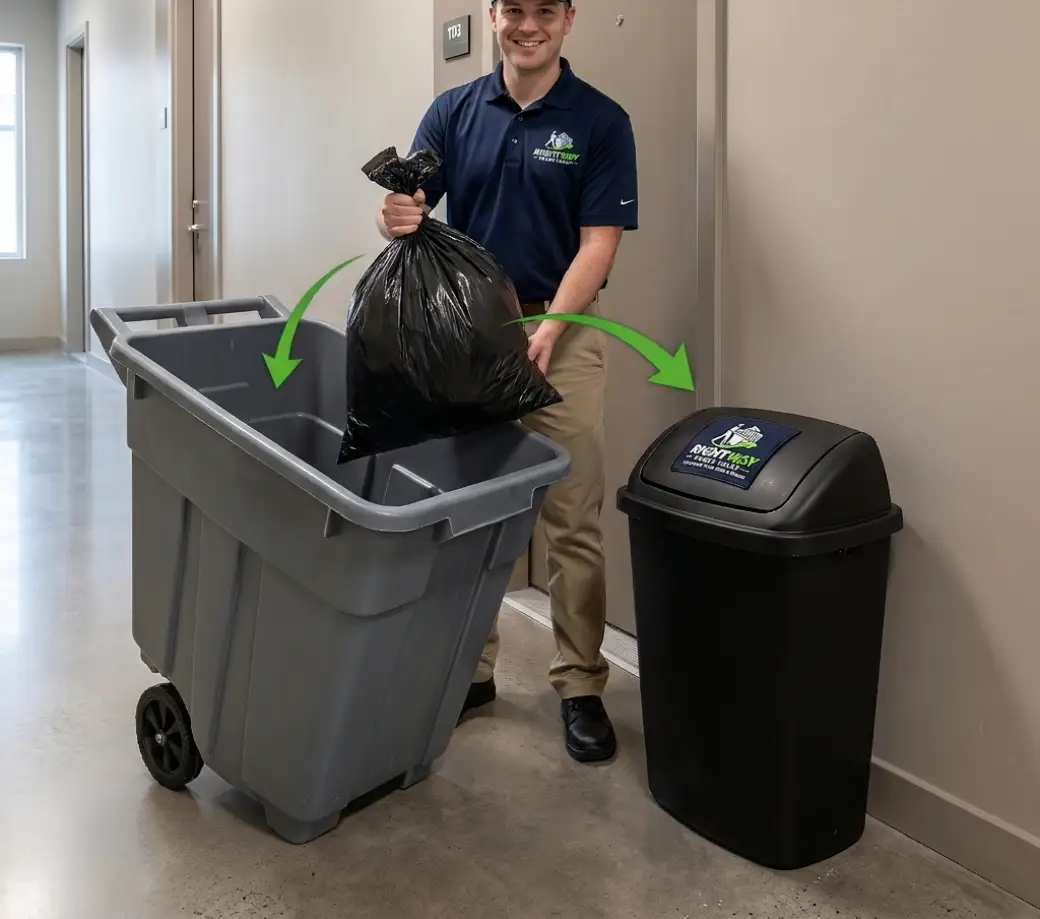
Valet trash can size is a property choice. The can must fit the landing, hold a tied household bag, and be the only set-out point. Rightway Trash Valet collects from that can.
Pair this with what can go in valet trash and valet trash rules.
Get a valet trash quote and describe the can the community will use.
Get started
Eliminate the stress of trash duty.
Name the property. Rightway follows up at the email or phone you enter.
- Rightway offers service to 99+ locations
- Your hauler stays in place
- One point of contact for your office